Each year, influenza causes significant illness in Australian children, particularly those under five years of age. For the 2026 flu season, a needle-free nasal spray flu vaccine is becoming available in some Australian states, offering an alternative to the traditional flu shot.
This article explains how the intranasal flu vaccine works, which children may be eligible, and how availability differs across NSW, Queensland and Victoria.
Why Flu Vaccination Is Important for Young Children
Across Australia, influenza continues to affect large numbers of children each year. However, vaccination rates among young children remain relatively low.
In 2025, only 25.7% of children aged six months to five years received a flu vaccination, the lowest rate recorded since 20211. In the same year, children under five reported more than 44,500 influenza infections, which accounted for 10.9% of all national flu cases2.
Children and teenagers also represented a significant proportion of influenza infections overall, with more than one in three cases occurring in people under 15 years of age2.
Related link: Why does my child need a flu shot?
Mabel’s story – Protect your children from pneumococcal
A Needle-Free Flu Vaccine Option for Children
Royal Australian College of GPs (RACGP) President Dr Michael Wright highlights that many kids are fearful of needles, which can stall vaccination efforts – particularly as two thirds of parents say the distress they feel when thinking about vaccinating their child acts as a barrier. That’s why needle-free vaccinations are a game changer2.
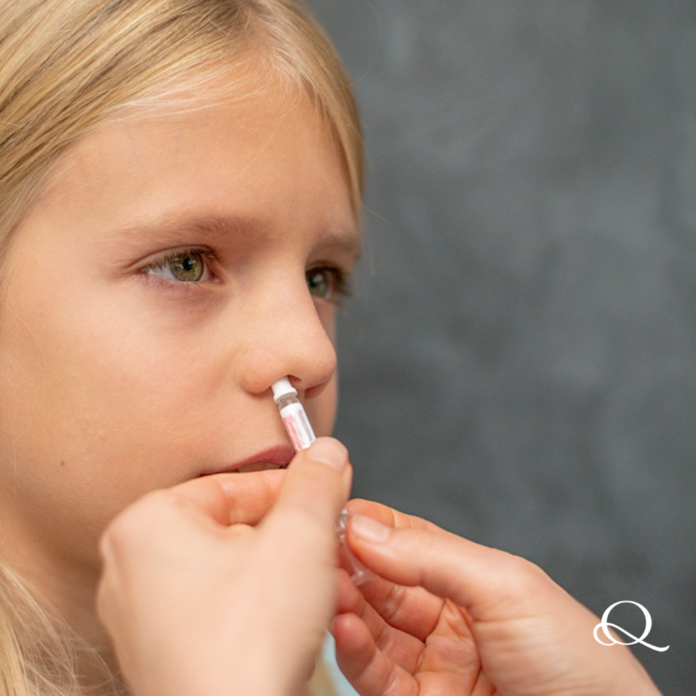
For the 2026 flu season, a needle-free influenza vaccine delivered as a nasal spray is becoming available for young children in parts of Australia.3
This vaccine, known as FluMist, is designed to make flu vaccination easier for children who may feel anxious about injections.
The intranasal flu vaccine is administered as a gentle spray into each nostril, rather than an injection into the arm. It is approved by the Therapeutic Goods Administration (TGA) and has been used safely in countries such as the United Kingdom and the United States for many years.
Key features:
- Needle-free nasal spray
- Administered in both nostrils
- Designed for children and adolescents
- Helps protect against influenza infection and severe illness
For parents, this option may help make the annual flu vaccination process less stressful for children.
Possible Side Effects
Like all vaccines, the intranasal flu vaccine can cause side effects, although these are usually mild and temporary.
Common side effects may include:
- Runny or blocked nose
- Headache
- Mild tiredness
- Serious allergic reactions such as anaphylaxis are extremely rare.
Because FluMist is a live attenuated vaccine, some children with specific medical conditions may be advised to receive the traditional injectable flu vaccine instead. Your GP can help determine the most appropriate option.
Which Children Can Receive the Intranasal Flu Vaccine?
The FluMist may be suitable for many children, particularly those who feel anxious about injections. Because it is given as a gentle spray into the nose instead of a needle, some families find it a more comfortable option.
In Australia, the nasal spray flu vaccine is generally approved for children aged 2 years and older.
Depending on the state program:
NSW and Queensland 4,5:
- Free for children aged 2 to under 5 years under state vaccination programs in 2026
- The vaccine may also be available privately for children and adolescents aged 2 to under 18 years
Victoria6: Available privately for children aged 2 to under 18 years, but currently not part of a state-funded program.
Your GP or immunisation provider can advise whether the nasal spray vaccine is available at your local clinic.
Which Children May Need the Injectable Flu Vaccine Instead?
Because FluMist is a live attenuated influenza vaccine (a weakened form of the virus used to stimulate immunity), it may not be recommended for children with certain medical conditions.
Children may be advised to receive the traditional flu injection instead if they7:
- Have a weakened immune system
- Are receiving immunosuppressive treatment
- Have certain chronic medical conditions
- Have a history of severe allergic reaction to flu vaccines
- Are younger than 2 years of age
In these situations, the injectable influenza vaccine remains a safe and effective option for protection against flu.
Parents should always speak with a GP before vaccination to ensure the most appropriate vaccine is chosen.
Speak to a GP about your child’s flu vaccination
If you would like to learn more about flu vaccination options for children, including whether the intranasal flu vaccine is available at your local clinic, speak with a GP.
You can book an appointment with a doctor at your nearest practice to discuss the most suitable flu vaccine for your child before the 2026 flu season.
Frequently Asked Questions
Is the nasal spray flu vaccine safe for children?
Yes. The vaccine has been used in millions of children internationally and has been approved by Australia’s Therapeutic Goods Administration.
Does the nasal spray vaccine hurt?
No. The vaccine is administered as a gentle spray into the nose, which many children find easier than an injection.
How effective is the nasal spray flu vaccine?
Studies have shown that the intranasal influenza vaccine can provide strong protection against influenza in children and may help reduce severe illness and hospitalisation during flu season.
Can the nasal spray be given with other childhood vaccines?
Yes. In many cases it can be given at the same visit as other routine vaccines. Your GP can advise on the best schedule.
Is the nasal flu vaccine free in Australia?
This depends on the state:
- Free for eligible children in NSW and QLD programs
- Private option in Victoria
Medically reviewed by:
Dr Campbell Howitt, Chief Medical Officer (NSW)
Dr Peter Janovic, Chief Medical Officer (VIC)
References:
1. National Centre for Immunisation Research and Surveillance (NCIRS), Influenza vaccination coverage data,2026, https://ncirs.org.au/influenza-vaccination-coverage-data
2. RACGP, Australia posts record-breaking flu numbers as vaccination rates stall,20 October 2025. https://www.racgp.org.au/gp-news/media-releases/2025-media-releases/october-2025/australia-posts-record-breaking-flu-numbers-as-vac
3. TGA Australia, 2026 Seasonal Influenza Vaccines,
10 March 2026 https://www.tga.gov.au/resources/publication/corporate-reports/2026-seasonal-influenza-vaccines#vaccines-for-use-in-children
4. NSW Health, Free nasal spray influenza vaccine for children under five, https://www.nsw.gov.au/ministerial-releases/free-nasal-spray-influenza-vaccine-for-children-under-five
5. Queensland Health, 2026 Queensland Nasal Spray Flu Immunisation Program, https://www.health.qld.gov.au/clinical-practice/guidelines-procedures/diseases-infection/immunisation/schedule/2026-queensland-nasal-spray-flu-immunisation-program
6. Victorian Department of Health, Seasonal influenza vaccine, https://www.health.vic.gov.au/immunisation/seasonal-influenza-vaccine
7. Australian Government Department of Health and Aged Care. The Australian Immunisation Handbook – Influenza vaccines.
