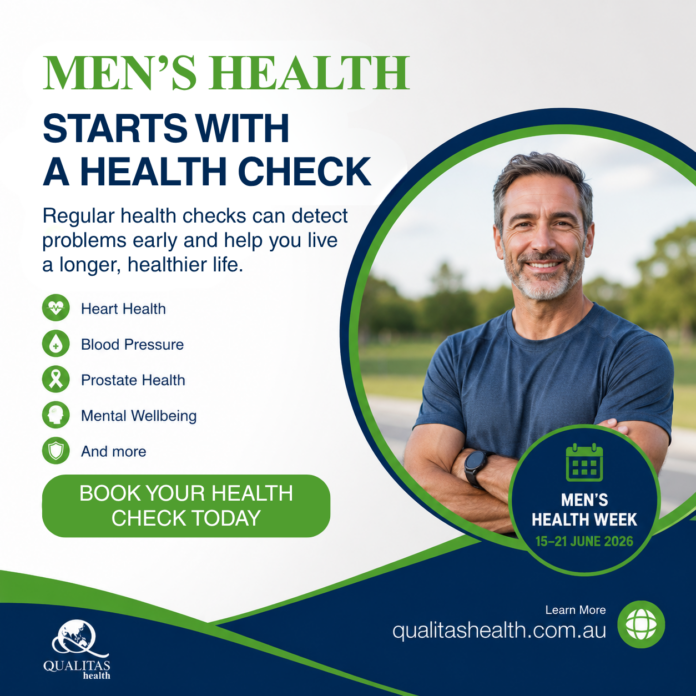
Men’s Health Week (15–21 June) is a chance to pause and check in — on ourselves, and on the men we care about. And the reason it matters comes through clearly in the numbers. According to the Australian Institute of Health and Welfare, almost half of all deaths among Australians under 75 are considered potentially avoidable, and men make up close to two-thirds of them.1
That’s a sobering figure, but it carries a hopeful message too: ‘avoidable’ means there’s something we can do. Many of these health concerns can be picked up early, managed well, and in many cases prevented altogether. Often, it starts with something as simple as a check-up.
Why so many men put off their health checks
If you’ve been meaning to book an appointment for a while now, you’re far from alone. There are some very human reasons men tend to delay:
- The “she’ll be right” mindset. Many men are quietly taught to push through and tough it out, which can make asking for help feel harder than it should.
- Life is full. Between work, family and everything in between, a health check is easy to keep pushing down the list.
- Not knowing where to start. It’s not always clear which checks you need, or how often.
- Worry about what you might find. Worries aside, catching something early almost always means more options and better outcomes.
None of these are failings. They’re understandable. The good news is that taking the first step is usually far simpler than people expect.
The checks worth knowing about
Staying on top of a few key checks is one of the most effective things you can do for your long-term health.2 Here’s a straightforward guide to the ones that matter at different stages of life. Your GP can help you work out which are right for you and when.
Blood pressure. High blood pressure rarely comes with warning signs, yet it’s a major contributor to heart disease and stroke. The Heart Foundation suggests a check at least every two years from age 18, and more regularly once you’re 45 or older.3
Heart health. A Heart Health Check looks at the bigger picture; cholesterol, blood pressure and other risk factors together. It’s recommended at least every two years from age 45, or from 30 for Aboriginal and Torres Strait Islander peoples.4
Diabetes. A simple blood glucose test can catch the early signs of diabetes, when it’s most manageable. Diabetes Australia suggests screening every three years — and more often if you’re carrying extra weight or have other risk factors. Your GP can advise.5
Prostate health. Prostate checks become more relevant from around age 50. The Prostate Cancer Foundation of Australia recommends a conversation with your GP about a PSA blood test, with two-yearly testing generally offered to men aged 50–69. If you have a family history or are otherwise at higher risk, it’s worth starting that conversation earlier.6
Skin checks. Australia has one of the highest rates of skin cancer in the world, so it pays to know your skin. Cancer Council Australia recommends seeing your doctor about any spot or mole that’s new or changing. If you’re at high risk, more thorough monitoring every six months may be advised.7
Mental wellbeing. This one matters enormously — men account for roughly three-quarters of suicide deaths in Australia.1 Looking after your mind is every bit as important as looking after your body, and reaching out early makes a real difference. A regular check-in with your GP or a mental health professional can help you stay on top of stress, anxiety and low mood. You don’t have to wait until things feel overwhelming.
Eyes and ears. Vision and hearing tend to change so gradually that we don’t notice. Optometrists generally suggest an eye test every two years.8 For hearing, younger adults are usually fine with a check every three to five years, while annual checks are recommended once you’re over 60 — especially if you’ve worked around loud noise.9
Bowel screening. Bowel cancer is highly treatable when caught early. Australians aged 50–74 are automatically sent a free, at-home screening kit every two years, and those aged 45–49 can now request their first kit through the National Bowel Cancer Screening Program.10 It’s quick, private and done in your own home.
Health assessments. A Medicare-funded health assessment is a great way to take stock of your overall health and spot risk factors for conditions like heart disease and diabetes before they take hold. People aged 40-49 at high risk of diabetes may be eligible for an assessment every 3 years, those aged 45–49 who are at risk of chronic disease may be eligible for a one-off assessment, and those aged 75 and over may be eligible for one each year.11 Your GP can let you know if you qualify.
This Men’s Health Week, take the first step
You don’t need to tackle all of this at once. Often the most powerful thing you can do is simply book one appointment and let your GP help you map out the rest.
Early detection and prevention are at the heart of a long, healthy life, and we’d love to support you on that journey. Whether it’s a check-up for yourself or a gentle nudge to a mate, dad or partner, this is the week to act.
To book an appointment or learn more, visit our website or get in touch with your nearest Qualitas Medical Practice. Looking after your health is one of the best investments you’ll ever make, and we’re here to help you do it.
References
- Australian Institute of Health and Welfare, The health of men in Australia (updated 19 November 2025). https://www.aihw.gov.au/reports/mens-health/health-of-men
- Northern Sydney Local Health District (NSW Health), Men’s Health Check. https://www.nslhd.health.nsw.gov.au/CYFH/HealthTopics/Documents/NS09853B-E.pdf
- Heart Foundation, Blood pressure and your heart. https://www.heartfoundation.org.au/your-heart/blood-pressure-and-your-heart
- Heart Foundation, Heart Health Checks. https://www.heartfoundation.org.au/your-heart/heart-health-checks
- Diabetes Australia. https://www.diabetesaustralia.com.au/
- Prostate Cancer Foundation of Australia. https://www.pcfa.org.au/ (Note: PCFA’s 2025 draft guidelines, pending NHMRC approval, recommend men consider a baseline PSA test from age 40 and that two-yearly testing be offered to all men aged 50–69.)
- Cancer Council Australia, Position statement — early detection of skin cancer. https://www.cancer.org.au/about-us/policy-and-advocacy/position-statements/uv/early-detection
- Better Health Channel, Eye tests. https://www.betterhealth.vic.gov.au/health/conditionsandtreatments/eye-tests
- Ear Science Institute Australia, The importance of getting regular hearing tests. https://www.earscience.org.au/2022/09/19/the-importance-of-getting-regular-hearing-tests/
- Australian Government Department of Health, Disability and Ageing, National Bowel Cancer Screening Program. https://www.health.gov.au/our-work/national-bowel-cancer-screening-program
- Australian Government Department of Health, Disability and Ageing / Medicare Benefits Schedule, Health assessment items (45–49 years at risk of chronic disease; 75 years and over). https://www.health.gov.au/our-work/health-assessments ↩
