Around 150,000 Australians are diagnosed with cancer each year, and roughly one in two of us will be diagnosed by the age of 85.1
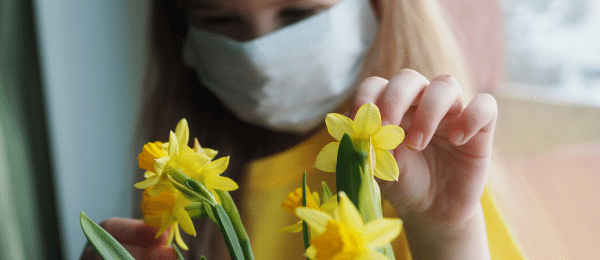
Daffodil Day is the Cancer Council’s response to that, and this year marks its fortieth anniversary. When it started in 1986, five-year cancer survival in Australia sat at about 46%. It is now around 72%.2 Research funded by campaigns like this one is a large part of why.
Daffodil Day 2026 falls on Thursday 20 August.
Research is one half of the picture. The other half is finding cancer early, and Australia already has three free national screening programs that do exactly that. Most people who are eligible for them do not complete them.
- Bowel screening is free, arrives in the post, and 58% of kits are not returned.
- Cervical screening is now every five years, and you can collect the sample yourself.
- Breast screening is free from 50, and available on request from 40.
- Skin cancer has no national program, despite Australia having the highest rate in the world. Many GPs have additional qualifications accrediting them to do the check.
Bowel screening: the free test in the drawer
The National Bowel Cancer Screening Program turns 20 this year. It posts a free test kit to eligible Australians aged 50 to 74 every two years.3
Between January 2023 and December 2024, around 6.4 million people were invited. About 2.7 million people completed the test, representing a participation rate of 42%. That leaves roughly 3.7 million kits that were not returned.4
Those numbers matter because bowel cancer found early is highly treatable. The Department of Health puts it plainly: when detected early, more than nine in ten cases can be treated successfully.3
Of the people who took the test in 2024, 5.8% returned a positive result, meaning blood was detected that was not visible to the naked eye. A positive result is not a cancer diagnosis. It means a colonoscopy is needed to determine the cause.4
What changed recently. Since 1 July 2024, people aged 45 to 49 can also join the program. Kits are not posted automatically to this age group, so you have to ask. You can request one from the National Cancer Screening Register, or through your GP.3
If your kit arrived and ended up in a drawer, you can request a replacement. If you are between 45 and 49, you can start now rather than waiting five years for one to turn up.
Cervical screening: this is not the test you remember
The program changed substantially, and a lot of people are working from an out-of-date picture of it.
Cervical screening is for women and people with a cervix aged 25 to 74, and it is done every five years.5 It is a human papillomavirus (HPV) test now, not a Pap smear, because nearly all cervical cancers are caused by HPV.
You can collect the sample yourself. Since July 2022, self-collection has been available to everyone. You use a swab to collect the sample in private at the practice. Doctor collected and self collection are described by health authorities as equally accurate and safe ways to detect HPV.6
That change exists because the speculum examination was a barrier for a lot of people. If it has been keeping you away, it no longer has to.
Regular screening prevents around 90% of cervical cancers, and most people who develop cervical cancer in Australia have either never screened or are overdue.6 Australia is on track to be one of the first countries to eliminate cervical cancer as a public health problem, currently projected for 2035.6
You still need screening if you have had the HPV vaccine.6
Breast screening
BreastScreen offers a free mammogram every two years to women aged 50 to 74, who are actively invited.6
Women aged 40 to 49, and those over 74, can also access the program. They are not invited automatically, so it is a matter of contacting BreastScreen directly.6
Whether screening at 40 is the right choice for you depends on your own risk factors, including family history, and is a conversation to have with your GP.
Skin cancer: the gap in the system
Australia has the highest rate of skin cancer in the world; roughly two in three Australians will be diagnosed with a skin cancer in their lifetime, and Cancer Council refers to it as our national cancer.7
There is no national screening program for it.
That is not an oversight so much as a genuine difficulty. Population-wide skin screening has not been shown to work the way bowel, cervical and breast screening do, and it carries a real risk of overdiagnosis. So the approach in Australia rests on two things instead.
Knowing your own skin. Most skin cancers are found by the person who has them or by someone close to them. What matters is change. A spot that is new, or that has changed in size, shape, colour or texture, or that itches, bleeds, causes pain or will not heal.
Skin Checks with a doctor for people at higher risk. That includes fair skin, a history of sunburn or solarium use, lots of moles, a previous skin cancer, a family history of melanoma, or years spent working outdoors. How often you need one, and whether you need one at all, depends on your risk profile, which is a conversation to have with your GP.
Skin checks are accessible and should be done every year
Skin cancer medicine is a recognised area of additional training for Australian GPs, covering dermoscopy, lesion assessment and biopsy technique. The Skin Cancer College Australasia, the peak body for primary care skin cancer doctors across Australia and New Zealand, runs an accreditation program that identifies GPs who have completed substantial extra study and passed assessment in diagnosing and managing skin cancer. Its education programs have reached thousands of primary care doctors and nurses.8
So it is worth finding out whether your own practice has someone. Three ways to check:
- Look at the practice website. Skin checks are usually listed under services, and many practices name the doctors who perform them.
- Call reception. They will know which GPs at that clinic do skin checks and how long the appointment runs.
- Check the online booking options. Many practices now list a skin check as its own appointment type, so you can book one directly at the time of booking without needing to ring first.
A full skin check takes longer than a standard consultation, so it needs to be booked as its own appointment rather than added to the end of one. Booking it properly is the difference between a thorough look and a quick glance at the one spot you mentioned.
And if you have a spot that is worrying you now, book an appointment soon and inform the doctor.
What screening does not do
Screening tests are designed for people who feel well. They are looking for disease before it causes symptoms.
If you already have symptoms, screening is the wrong tool and waiting for your next round is the wrong plan. Book an appointment to be assessed. Some of the things that warrant an appointment regardless of where you are in a screening cycle include: blood in your stool, a persistent change in bowel habit, unexplained weight loss, abdominal pain, bleeding between periods or after sex, a new breast lump or nipple change, arm pit or lymph node swelling, a spot on your skin that is changing, a cough that will not settle, or persistent unexplained pain.
Most of the time these turn out to be something other than cancer. That is a reason to get them looked at, not a reason to wait.
What you can do this Daffodil Day
Check where you stand. You can look up your screening history through the National Cancer Screening Register. Or ask at your next appointment, and your GP can tell you what you are due for.
Deal with the kit. If a bowel screening kit is sitting in a cupboard, it takes a few minutes. If you have lost it, or you are 45 to 49 and have never had one, you can request one.3
Book what is overdue. Cervical screening can be done in a standard appointment, and you can ask about self collection when you book.
Sort out a skin check. Look at your practice website or the online booking options to see whether a skin check is listed, or call reception and ask which GPs do them.
Support the appeal. Daffodil Day raises funds for cancer research, prevention and support services. Details are at daffodilday.com.au.1
The 46% to 72% shift in survival over forty years came from research and from earlier detection working together. The research part needs funding. The detection part mostly needs people to do tests that are already free.
We encourage preventative healthcare and regular GP reviews.
To check what screening you are due for, or to book a skin check, visit your local Qualitas Medical Practice website or call reception.
This article is general information only and is not a substitute for individual medical advice. Speak with your GP about your own circumstances.
References
- Cancer Council Australia. Daffodil Day Appeal. cancer.org.au ↩
- Cancer Council. Daffodil Day 2026. daffodilday.com.au ↩
- Australian Government Department of Health, Disability and Ageing. National Bowel Cancer Screening Program. health.gov.au ↩
- Australian Institute of Health and Welfare. Participation in the National Bowel Cancer Screening Program gradually improving, June 2026, and National Bowel Cancer Screening Program monitoring report 2026. aihw.gov.au ↩
- Australian Government Department of Health, Disability and Ageing. About the National Cervical Screening Program. health.gov.au ↩
- Victorian Department of Health. Cancer screening. health.vic.gov.au ↩
- Cancer Council Australia. National Skin Cancer Action Week: combatting Australia’s national cancer. cancer.org.au ↩
- Skin Cancer College Australasia. About the College and Certificate of Skin Cancer Medicine. skincancercollege.org Membership and education figures drawn from the College’s 2022 to 2023 federal pre budget submission and should be updated if more current figures are available. ↩
